Every Balenciaga bag has an interior tag with a serial number and, on most bags made since 2003, a season letter. The single most reliable check you can do yourself: the number on the front of the tag must exactly match the number on the back. A mismatch is one of the strongest fake signals there is. Here’s where to find it, what else to check, and why the serial number alone still isn’t proof.
The One Check Anyone Can Do: Front-Back Number Match
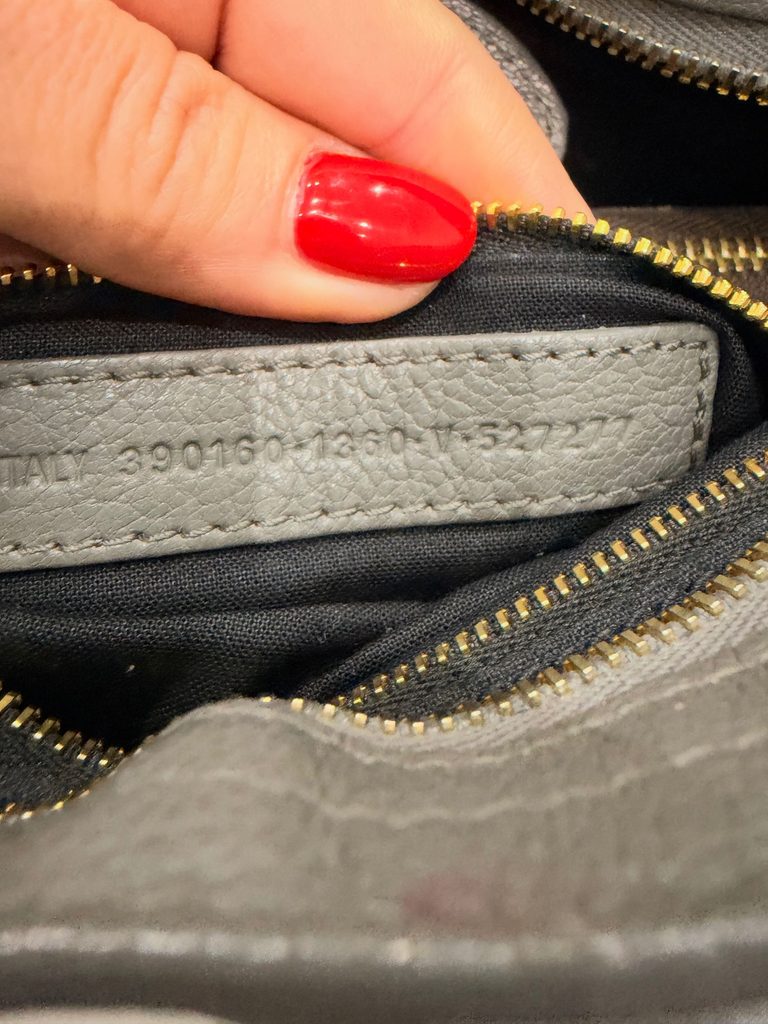
Before anything else, do this one check. Balenciaga’s interior tag prints a style/serial number on the front. On genuine bags, that exact same number is repeated on the back of the tag. If the numbers don’t match, or one side is missing digits, blurry, or clearly re-printed, that’s close to a confirmed counterfeit on its own.
This is the one part of Balenciaga authentication that doesn’t require any specialized knowledge. Anyone can flip the tag over and compare.
Where to Find the Tag
The tag is located inside the bag, usually near a zippered interior pocket. Depending on the era, it appears either as a metal plate (common on earlier bags, sterling silver through 2008, nickel after) or a leather tab (more common on newer bags without a metal nameplate). Either way, the same front-back number check applies.
Reading the Season Letter
Starting with the Fall/Winter 2003 season, Balenciaga began adding a single letter after the serial number to indicate the season. The system runs backwards through the alphabet, meaning a later season uses an earlier letter than one that came before it.
Here’s the part worth being upfront about: Balenciaga has never published an official letter-to-season table, and different independent sources list slightly different mappings with documented exceptions, especially for bags made before 2012 (when the letter was added to the back of the tag as well, making it easier to read). Because of that, we’re not going to present a definitive year-by-year decode here. Treat the season letter as a useful clue for narrowing down an era, not a precise date you can pin down from a public chart alone.
Label Text Evolution: “Balenciaga_Paris” vs “Balenciaga.Paris”
This is one of the more reliable details to check, and it’s simple to verify. The interior label text changed at a specific point:
- 2001–2004: reads “Balenciaga_Paris” with an underscore
- 2005–present: reads “Balenciaga.Paris” with a period
If a bag’s tag punctuation doesn’t match the era the rest of the bag suggests, that’s a red flag worth investigating further.
Hardware, Zippers, and Rivets
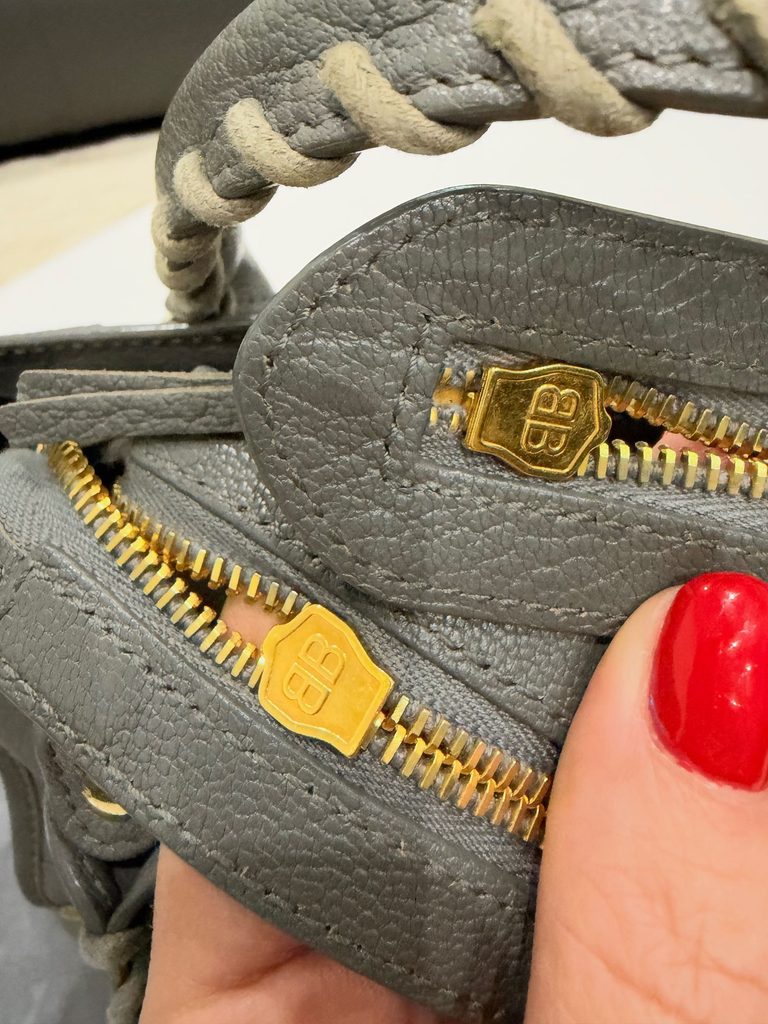
A few more construction details genuine Balenciaga bags consistently get right:
- Zippers: Balenciaga used Lampo-branded zippers until around 2014, after which the brand switched to a zipper pull stamped with a capital “B.” One caution here: Lampo is a legitimate zipper manufacturer used by many brands, including some counterfeits, so a Lampo zipper alone doesn’t confirm authenticity, it just needs to be consistent with the bag’s claimed era.
- Rivets: bags made before 2005 typically have rounded, slightly convex rivets. Many counterfeits use rivets with shallow, flat, or squared-off indentations instead.
Why the Serial Number Alone Isn’t Enough
Even a perfectly matching front-and-back serial number only tells you the tag is internally consistent, not that the whole bag is genuine. Experienced counterfeiters can replicate a matching serial number format convincingly. That’s why a real authentication check cross-references the tag against the label text era, hardware, zipper style, rivets, and leather quality together, rather than stopping at the first thing that checks out.
FAQ
Do all Balenciaga bags have a serial number? Most do, though very early styles and some leather-tag bags before 2012 can be harder to date precisely since the season letter wasn’t consistently added to the back of the tag until then.
Can the season letter tell me the exact year? Not reliably from public information alone. Balenciaga hasn’t published an official table, and there are known exceptions across eras, so treat it as a general indicator rather than a precise date.
Is a mismatched front-and-back number always fake? It’s one of the strongest signals available, close to conclusive on its own, though a professional authentication still checks the rest of the bag to confirm.
What’s the fastest way to be sure before I buy? Photograph the tag (front and back), the zipper pull, and the rivets clearly, then compare them against verified references for that model and era, or send them to a professional authenticator.
Get a Professional Opinion
The serial number match is a strong first check, but Balenciaga is one of the more complicated brands to date precisely without hands-on experience across eras. Our authenticators check the tag alongside the label text, hardware, zippers, and construction specific to your bag’s exact style and era, and issue a verifiable certificate of authenticity.
For more on what we look for across this brand, see our Balenciaga authentication guide.