Hermès bags don’t have serial numbers. They use a blind stamp instead: a letter heat-pressed into the leather that marks the year of manufacture, plus a second code identifying the artisan who made it. Unlike Louis Vuitton or Chanel, there’s no public database to look up a Hermès blind stamp, it’s for internal tracking only, and a correctly formatted one still doesn’t prove a bag is real. Here’s where to find it, how to read it by era, and what else genuine Hermès craftsmanship always gets right.
Hermès Doesn’t Use Serial Numbers: Here’s the Blind Stamp System
If you’re searching for a “Hermès serial number,” the short answer is that one doesn’t exist in the way you’d expect from a car or a watch. Instead, Hermès leather goods carry a blind stamp made up of two parts:
- The Date Stamp: a single letter that identifies the year of manufacture
- The Craftsman Stamp: a separate sequence of letters and numbers identifying the specific artisan or atelier section that made the bag
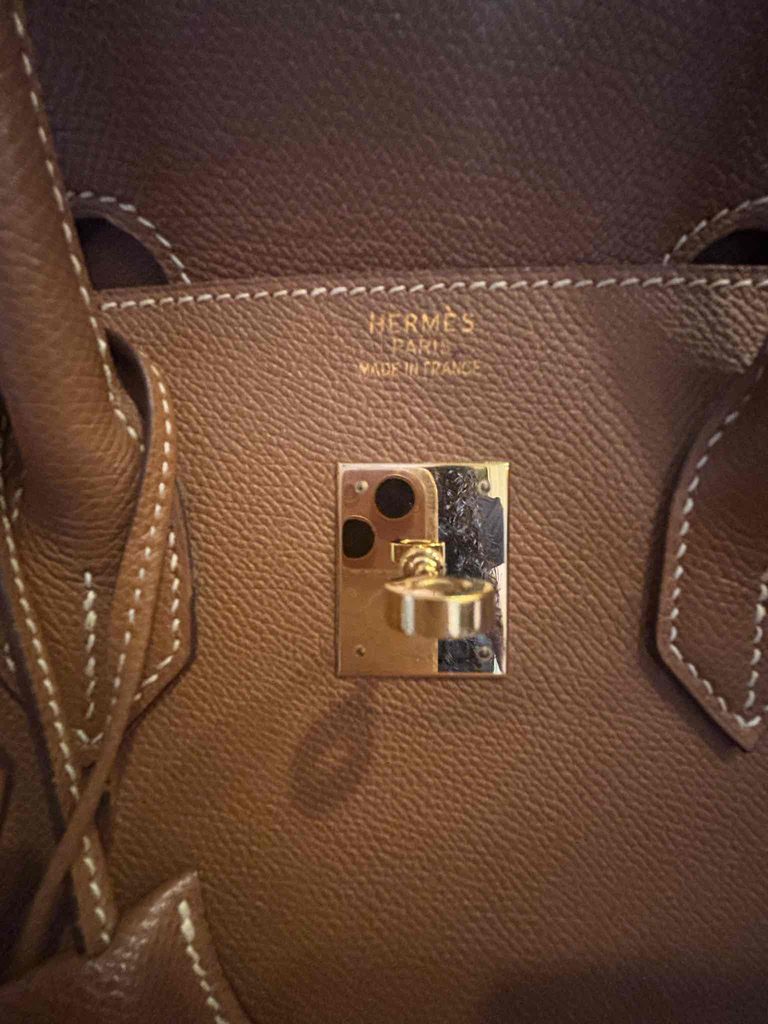
It’s called a “blind” stamp because it’s pressed directly into the leather with no gold or silver foil, unlike the “Hermès Paris Made in France” logo stamped on the front of the bag, which is a completely different mark and not the date code.
Where to Find the Blind Stamp
Placement depends on the bag style and its production era:
- Birkin and Kelly: on the strap for bags made before 2016; on the interior left side for bags made after 2016
- Constance: on the interior divider’s upper corner, just below the stitch line
- Evelyne: inside the closure strap
The stamp can be small and easy to miss. Check in bright light or with a flashlight, and run your fingers over the leather; because it’s embossed rather than printed, you should be able to feel a slight indentation.
How to Read It by Era
Hermès has changed the shape surrounding the date letter roughly every 25 years, which is the first thing to check before trying to read the letter itself:
| Era | Shape | How it works |
|---|---|---|
| 1945–1970 | No shape | A single letter with no surrounding shape. A = 1945, running through Z = 1970 |
| 1971–1996 | Circle | The alphabet restarts, this time framed in a circle. A = 1971, through Z = 1996 |
| 1997–2014 | Square | The alphabet restarts again, now framed in a square |
| 2015–present | No shape | Hermès returned to unframed letters, but the system became more complex and less predictable, often paired with additional characters for internal production tracking |
We’re intentionally not listing every individual year-to-letter mapping here. Hermès made the post-2015 system deliberately harder to decode publicly as an anti-counterfeiting measure, and even the circle and square eras have had documented exceptions and transition years. Treat the table above as a way to place your bag in the right general era, not a precise lookup tool.
Why There’s No Way to “Look It Up” Like Other Brands
This is worth stating clearly because it surprises a lot of buyers coming from Louis Vuitton or Chanel: there is no public database where you can enter a Hermès blind stamp and get a verification result back. The code exists purely for Hermès’s internal manufacturing records.
That’s not a gap in how Hermès protects its bags, it’s part of the design. A closed, undocumented system is harder for counterfeiters to reverse-engineer than an open lookup table. But it also means that reading a blind stamp correctly only tells you the bag is consistent with a real one from that era. It doesn’t confirm authenticity on its own, and high-end replicas increasingly copy real date stamps and craftsman codes from genuine bags.
Beyond the Stamp: What Else Genuine Hermès Gets Right
Because the blind stamp alone isn’t conclusive, an experienced authenticator always checks construction alongside it.
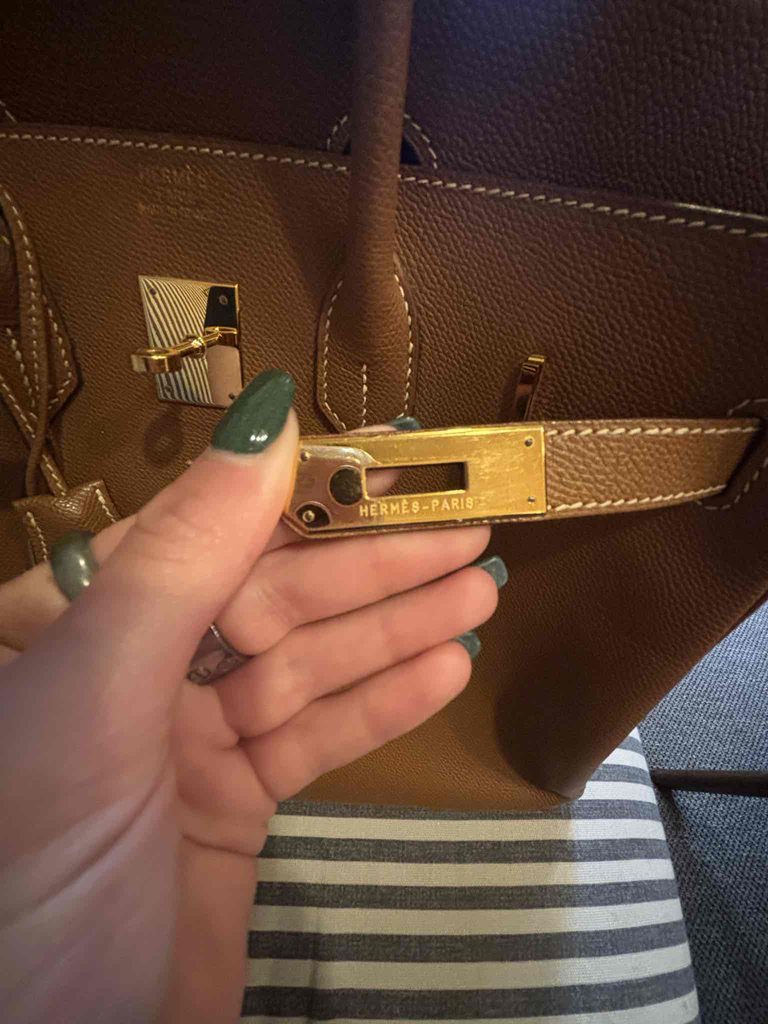
- Saddle stitching: Hermès leather goods are hand-stitched using a technique where two needles pass through the same hole from opposite sides. Look closely and the stitching is slightly uneven, not perfectly uniform. Stitching that looks machine-perfect is actually a warning sign, not a good one.
- Leather type: Hermès uses several signature leathers, each with a distinct grain and feel, including Togo (grainy, lightweight), Epsom (embossed, structured), and Clemence (soft, pebbled). The texture should match what’s expected for that specific leather type.
- Hardware: genuine hardware is either Palladium (a silver-tone finish) or gold-plated, and should feel solid and substantial. Engravings should be crisp and evenly spaced, not shallow or blurry.
FAQ
Can I look up my Hermès blind stamp online?
No. Unlike Louis Vuitton date codes or Chanel serial numbers, there’s no public tool to verify a Hermès blind stamp. It’s for Hermès’s internal use only.
Does every Hermès bag have a blind stamp?
Bags made before 1945 generally don’t have one. Everything produced since does, though the format has changed several times.
Can a blind stamp be faked?
Yes. High-end counterfeits have been known to replicate real date stamps and craftsman codes taken from genuine bags, which is why the stamp should never be the only thing you check.
What’s the fastest way to confirm before I buy?
Get clear photos of the blind stamp, the stitching up close, and the hardware, then compare them against verified references for that exact model and era, or send them to a professional authenticator for a fast turnaround.
Not Sure What You’re Looking At?
The blind stamp is only one part of authenticating a Hermès bag, and Hermès designed it to be difficult to verify on your own. Our authenticators check the stamp alongside stitching, leather type, and hardware specific to your bag’s exact style and era, and issue a verifiable certificate of authenticity.
For the broader picture beyond the blind stamp, our Hermès authentication guide covers the common counterfeit red flags we see across Birkin, Kelly, Constance, and more.