An authentication certificate is a record that an expert reviewed your item and gave an opinion on whether it’s genuine. It proves that the review happened and what the verdict was. It doesn’t prove who owns the item, what it’s worth, or that the item in your hands is the same one that was reviewed, unless you verify the certificate yourself. Here’s what a certificate covers, what it can’t, and how to check one in under a minute.
What a Certificate Actually Proves
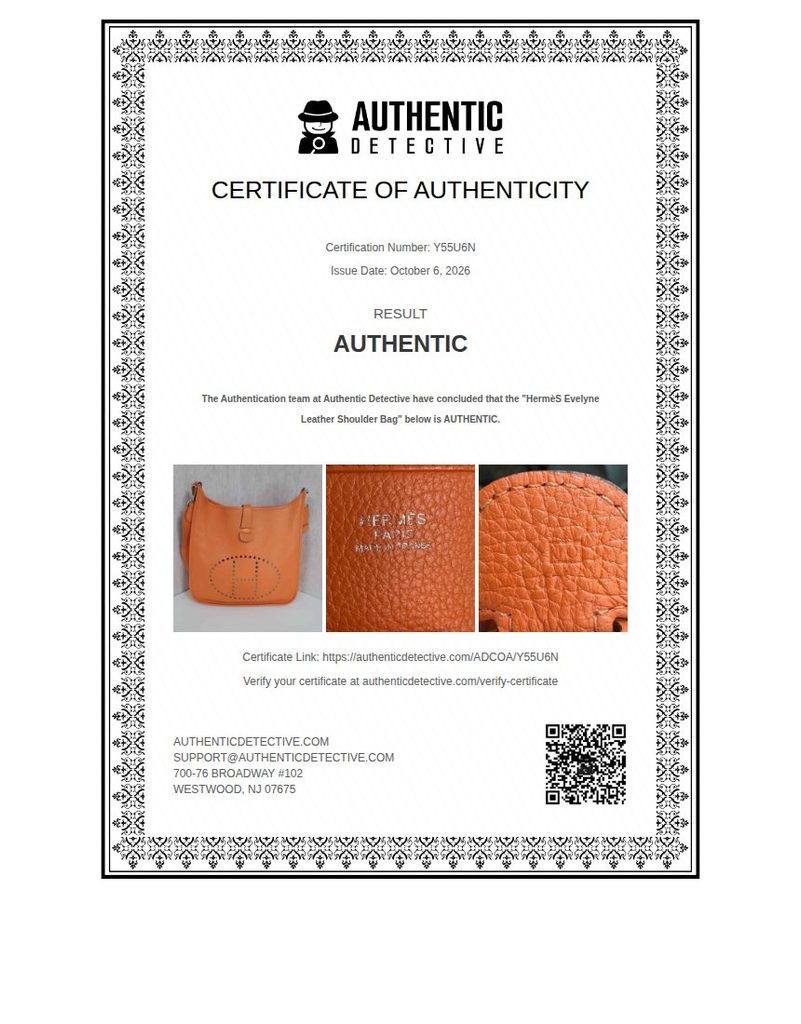
A Certificate of Authenticity from Authentic Detective is built around a few specific pieces of information:
- A unique certification number, which links the certificate to a record in our database
- The issue date, so you know when the review took place
- A clear result, either Authentic or not
- A statement from the authentication team naming the exact item that was reviewed, for example a “Hermès Evelyne Leather Shoulder Bag”
- Photos of the item taken from the submission, so the certificate shows what was actually assessed
- A certificate link and a QR code, both leading to the official digital copy
Put simply, a certificate proves that a trained authentication team looked at this specific item, reached a conclusion, and that the conclusion is on record and can be checked.
What It Doesn’t Prove
Being clear about the limits is what makes a certificate useful instead of misleading. A certificate does not prove:
- Ownership. It says the item was reviewed, not who owns it.
- Value or condition. Authenticity is about whether an item is genuine, not what it’s worth or how well it has been kept.
- That a certificate belongs to the item you’re holding. A printed certificate can be copied or attached to a different item. This is why checking the certificate number against the official record matters, and why the photos on the certificate should match the item in front of you.
- A statement from the brand itself. It’s an independent expert opinion, not a document issued by the brand.
It’s also worth knowing that an online review is based on the photos submitted. That’s why clear, well-lit photos of the details an authenticator needs make a real difference, and why a reviewer may ask for additional photos before reaching a verdict.
Authentication vs Verification
These two words get mixed up, and the difference matters.
Authentication is the process of reviewing an item to decide whether it’s real or fake.
Verification is the process of checking that a certificate is genuine, unaltered, and matches the official records.
You authenticate the item once. You can verify the certificate as many times as you like, and anyone you show it to can do the same.
How to Verify a Certificate
Checking a certificate takes less than a minute:
- Find the certification number printed near the top of the certificate. It’s a short code made up of letters and numbers, and it’s case sensitive.
- Go to our verification page and enter the number to confirm it against our records.
- Or scan the QR code on the certificate to pull up the official digital copy directly.
- Check the web address. The certificate link should start with authenticdetective.com. If a QR code or link sends you anywhere else, treat the certificate as suspicious.
- Compare the photos. The photos on the official digital copy should match the item you’re looking at.
Red Flags on a Certificate
Be cautious if you see any of these:
- No certification number, or a number that doesn’t come up when you check it
- A QR code or link that points to a different website
- Photos on the official record that don’t match the item
- A certificate shown only as a screenshot or PDF, with no way to check it independently
If a seller can’t point you to a way to verify the certificate, that tells you something.
Buying or Selling With a Certificate
If you’re selling, a certificate helps buyers feel confident, especially when you invite them to verify it themselves rather than asking them to take your word for it. Sharing the certificate link or number makes that easy.
If you’re buying, don’t rely on a photo of a certificate alone. Take the extra minute to verify it, and check that the item in the photos is the item you’re being sold.
FAQ
Is a certificate of authenticity a guarantee? No. It’s an expert opinion based on the submitted photos at the time of review. It tells you what the authentication team concluded, and it can be verified, but it isn’t a statement about value, condition, or ownership.
Can a certificate be faked? A printed certificate can be copied, which is exactly why verification exists. Checking the certification number or scanning the QR code against the official record is how you confirm a certificate is genuine and unaltered.
Does the certificate come from the brand? No. It comes from an independent authentication team, not from the brand that made the item.
What if I lose my certificate? Your certificate has a certification number and a digital copy on record, so the official version can be pulled up using the number or link. Keep the number somewhere safe.
How do I get a certificate? Submit clear photos of your item for review. If the team concludes it’s authentic, a certificate is issued. You can see current rates on our pricing page.