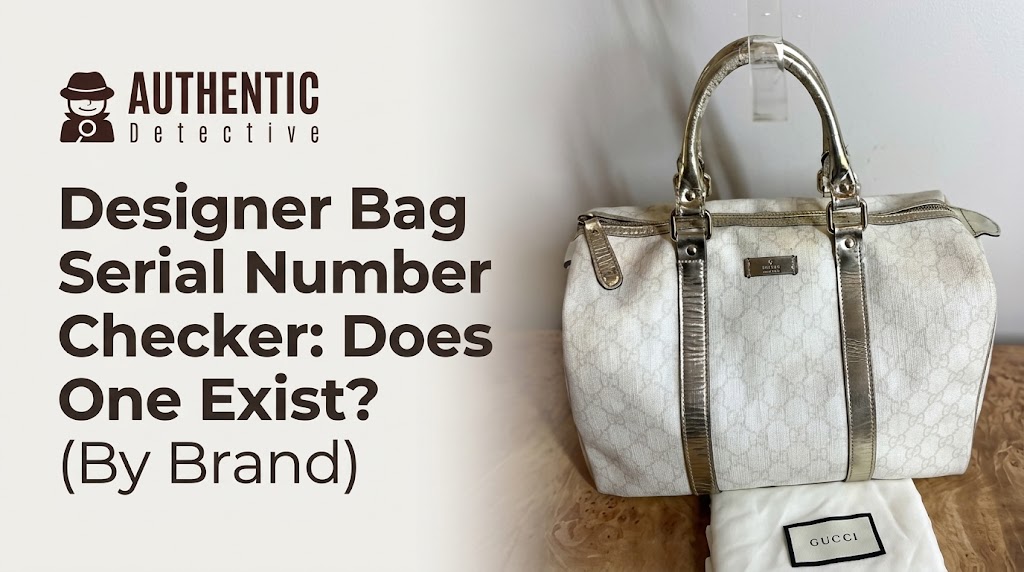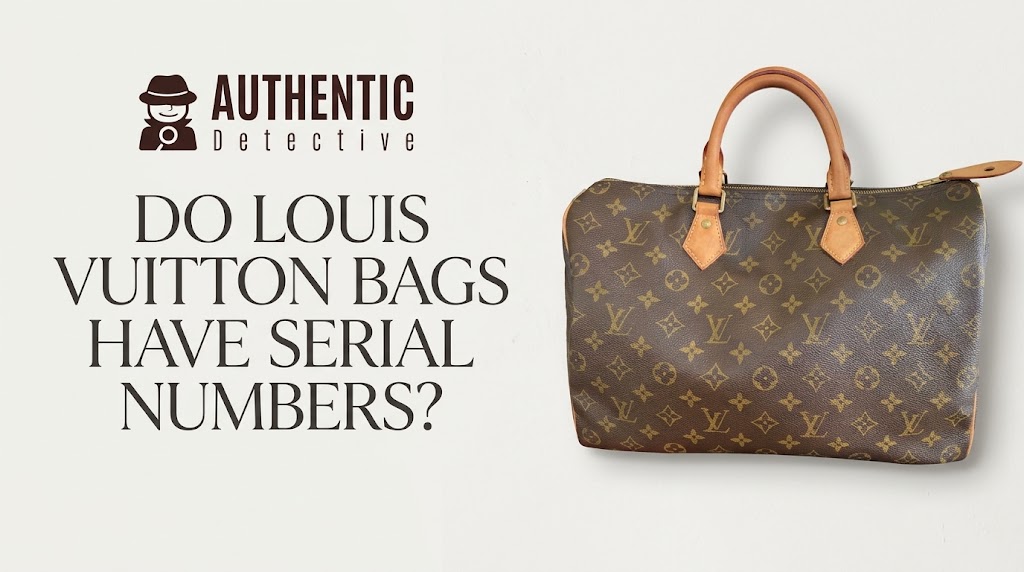
Five quick checks can catch most obvious fakes in about five minutes: the logos and stamps, the hardware, the stitching, the serial number or date code, and the material. If more than one of them looks wrong, walk away or get a professional opinion. But a bag that passes all five isn’t automatically real, because good counterfeits get some details right. Use this checklist before you pay, then decide whether to get an expert to confirm.
Before You Start: Get the Right Photos
You can’t check what you can’t see. If you’re buying online, ask the seller for clear, well-lit photos of:
- The front, back, sides, and base of the bag.
- Every logo and brand stamp, close up.
- The serial number, date code, or interior tag.
- The hardware: zippers, clasps, and buckles, with any engravings visible.
- The stitching, close up, especially at the handles and corners.
- The interior lining and any pockets.
- The dust bag, box, card, or receipt, if they exist.
A seller who refuses to send these is already giving you information.
Check 1: Logos and Stamps (60 seconds)
Look at the brand name and any stamps. On genuine bags, lettering is crisp, evenly spaced, and in the correct font, and stamps are pressed to a consistent depth.
Warning signs: letters that are too bold or too thin, uneven spacing, shallow or blurry stamping, a misspelled word, or a logo that sits crooked or off-center.
Check 2: Hardware (60 seconds)
Hardware is one of the fastest checks, because it’s hard to fake cheaply.
- Weight: genuine hardware is usually solid metal, so it feels substantial for its size.
- Finish: plating should be smooth and even, with no flaking, graininess, or visible seams.
- Engraving: crisp, deep, and evenly spaced.
Warning signs: hardware that feels light or hollow, a rough or uneven finish, a color that looks wrong for the brand, or blurry engravings.
Check 3: Stitching (60 seconds)
Look closely at the stitching along the seams, handles, and corners.
What you want to see: even stitches, consistent spacing, tight tension, and thread that matches the material.
Warning signs: loose threads, uneven or crooked lines, stitches that vary in length, or a thread color that doesn’t quite match. Some brands, such as Hermès, are hand-stitched and can look slightly irregular on genuine pieces, so judge a bag against what’s correct for that brand.
Check 4: Serial Number or Date Code (60 seconds)
Different brands use different systems: Louis Vuitton uses date codes, Hermès uses blind stamps, Gucci uses a style number, Chanel used serial stickers before moving to a microchip in 2021. Find the code and check that it’s clearly stamped, in the right place, and in a format that fits the brand.
The important point: a code that looks right does not prove the bag is real. Counterfeiters copy valid formats, and some copy real codes. Treat the code as a consistency check. A code that’s missing, badly stamped, or in the wrong format is a warning sign, but a correct-looking one isn’t a pass.
For how each brand handles this, see our guide to serial number checkers by brand.
Check 5: Material and Smell (60 seconds)
If you have the bag in hand, use your senses.
- Leather: should feel and age like real leather, not stiff plastic.
- Canvas: monogram canvas should be woven and coated, not printed on flat fabric.
- Smell: a strong chemical or plastic smell is a red flag.
- Lining: should be neatly finished and made of the right material for the model.
Warning signs: a plasticky feel, a pattern that doesn’t line up at the seams, or a smell that doesn’t fit a luxury leather good.
Red Flags From the Seller
Sometimes the person selling tells you more than the bag does:
- A price far below market. A big discount on a high-demand bag is the most common warning.
- Refusing extra photos. A genuine seller can usually send close-ups.
- Pressure to pay quickly. “Other buyers are waiting” is a classic push.
- Vague answers. No receipt, no history, and no clear explanation of where the bag came from.
How to Score What You Found
A single odd detail can simply be wear or a production variation on a real bag. Several flags together point toward a fake.
- No flags: a good sign, but not proof. For an expensive bag, still consider a professional check.
- One flag: look closer, ask the seller, and compare against reference photos for that model.
- Two or more flags: treat the bag as high risk. Walk away or get an expert opinion before paying.
When a Checklist Isn’t Enough
This checklist catches obvious fakes. What it can’t catch is a high-quality counterfeit that gets most details right, which is why professional authenticators cross-reference everything: stamps against hardware against stitching against codes against materials, for that exact brand, model, and era. We explain how in our guide to what experts actually check on a luxury bag, and our full walkthrough, Bag Authentication 101, goes deeper into each step.
Authentication costs far less than the risk of guessing wrong. See our cost guide for typical prices.
FAQ
Can I tell if a bag is real from photos?
You can often spot obvious fakes from clear photos of the stamps, hardware, stitching, and code. A confident result on a good counterfeit usually needs an experienced authenticator who knows what’s correct for that exact model.
How long does it take to check a bag?
The five checks above take about five minutes. A professional online authentication typically takes longer, depending on the service and how clear your photos are.
Is a serial number enough to prove a bag is real?
No. Counterfeiters copy valid code formats, so a correct-looking code proves nothing on its own.
What if the seller won’t send more photos?
Treat that as a warning sign. A seller with a genuine bag can usually take close-ups of the stamps, hardware, and code.
How much does it cost to authenticate a bag?
Online authentication typically runs from about $12 to $90 per item, depending on the brand and item type.
Should I check the bag before or after I pay?
Before. Once you’ve paid, your options are limited. Ask for the photos first and have them reviewed.
Not Sure? Get a Second Opinion
Send us clear photos and our authenticators will review them against the correct details for the brand and model, then issue a verifiable certificate of authenticity if the bag is genuine.